

Having lived in the Forest for 11 years, I've spent countless hours wandering among the trees, observing the ever-changing tapestry of nature. Springtime, with its abundant unfolding of life, never fails to inspire me. It's a spectacle that unfolds effortlessly, without any need for intervention.
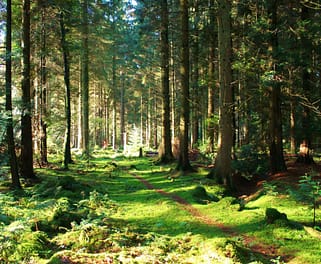
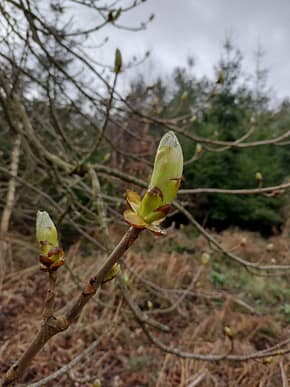
As I wander, I encounter various creatures, some unaware of my presence, while others seem skittish. Yet, each contributes to the vibrant life of the forest. One of my favourite past-times is watching the forest change through the seasons, winter, letting go, and spring, bursting with new growth and vibrant colours.
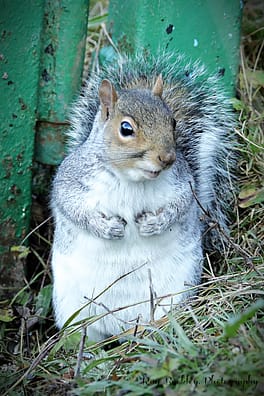
Among the inhabitants are boars, deer, foxes, rabbits, squirrels, mice, voles, and rats, creating a rich ecosystem. The birdlife adds to the therapeutic ambiance of the place.
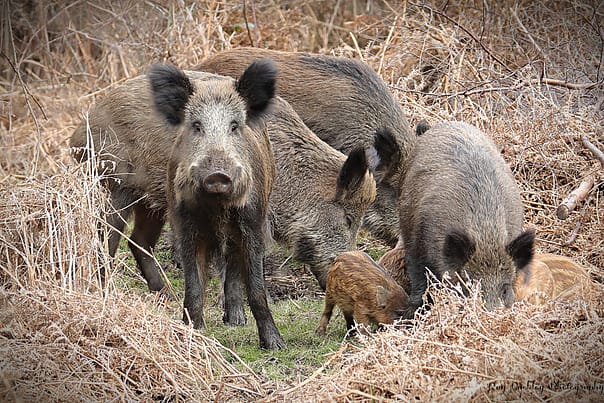
Boars captivate my attention. They exhibit remarkable family bonds, with mothers caring for their piglets diligently, I often see two families together, and if one sow falls to an untimely demise the other takes the piglets as her own. It's a trait that prompts me to reflect on our own human interactions, wondering how different the world would be if we all interacted that way. These boars, descendants of domestic pigs that found their way into the wild centuries ago, have adapted well to the forest habitat. With their robust build, dark fur, and distinctive tusks, they are well-suited to their environment.
The forest provides ample resources for their omnivorous diet, and I often encounter them foraging for roots, and fruits. From February to October female boars give birth to litters of piglets, varying in numbers, adding to the vitality of the forest. While generally shy, encounters between boars and humans do occur, sometimes leading to conflicts over damaged crops or gardens. However, these incidents are sporadic, and the boar population remains relatively stable.
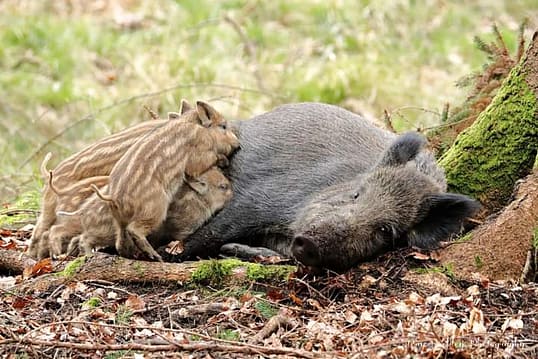
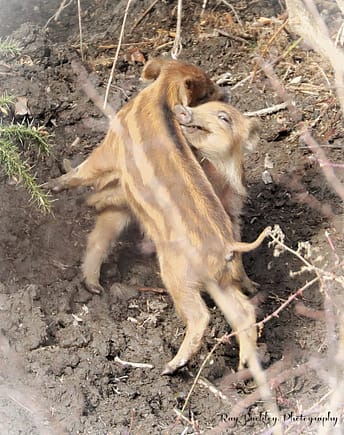
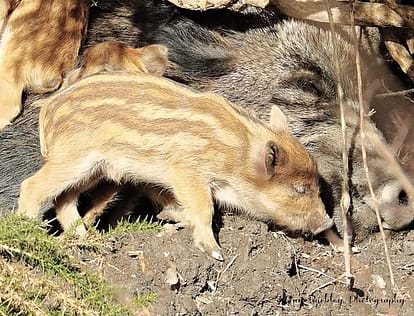
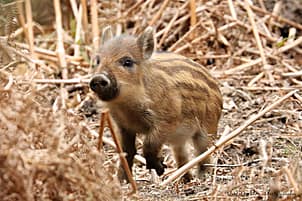
Boars have been part of the forest for centuries, contributing to its biodiversity and ecosystem balance. They serve as a reminder of the intricate interconnectedness of nature, a fact that never fails to fascinate me as I observe these creatures in their natural habitat, particularly enjoying watching the playful antics of the young ones.
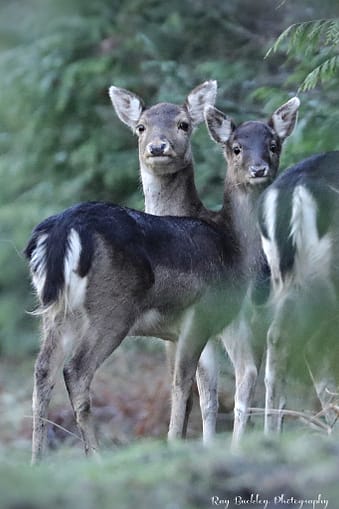
We also have Fallow and Roe deer roaming freely in the forest. Fallow deer are medium-sized deer with distinctive coat colours that vary greatly. They can range from light brown to dark brown, with some individuals even having white spots on their coat. They are social animals and often form small herds, although solitary individuals are also common. Breeding typically occurs in the Autumn, with females giving birth to a single fawn after a gestation period of about 7-8 months. The fawns are born with white spots on their coat, which helps camouflage them in their early days.
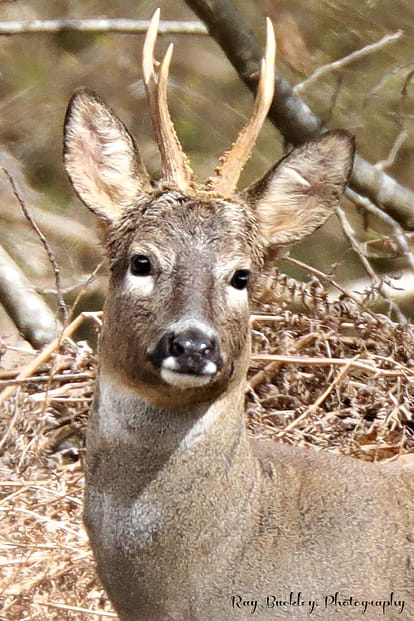
Roe deer are smaller than fallow deer, with a reddish-brown coat that fades to a duller shade in winter. They have a distinctive white rump patch bordered by a black stripe, which is particularly noticeable when they scarper when they see me. Roe deer are solitary animals for much of the year, although they may form small groups during the winter months. They are shy but may be active during the day in areas with less human disturbance. Breeding occurs in late summer, with females giving birth to 1-3 fawns after a gestation period of around 9 months. Like fallow deer, roe deer fawns are born with spots on their coat, which fade as they grow older.
Both fallow and roe deer are iconic species of the European countryside, adding to the diversity and beauty of the natural landscape.
These are just a couple of species here in the forest which add to the overall beauty and richness that captivates me daily.
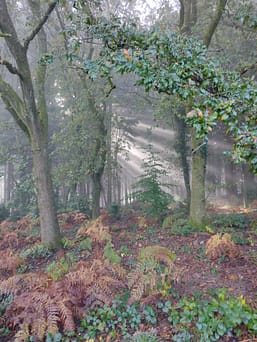
The trees put on a stunning show, especially in spring and autumn. The bright colours of new leaves and foliage when illuminated by the morning sun make a truly captivating sight. Early mornings, with the lingering mist, enhance the beauty of this natural spectacle, making it a truly mesmerising experience.
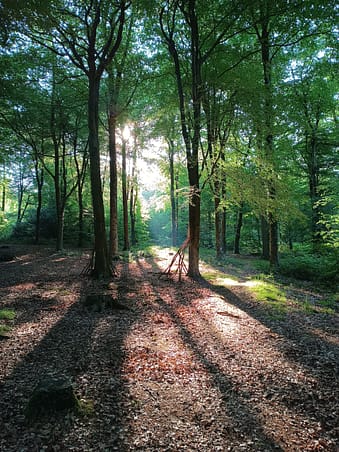
The forest is a beautiful place, its effortless ease and abundance has captivated me and taught me to look beyond the realms of our conditioned minds, to go deeper and think the unthinkable and believe there is more, much more to life beyond the confines of our complex minds. It has prompted me to look beyond reality and the next article will delve deeper into the power of the mind and the endless possibilities it creates if a cultivated imagination is nurtured and developed.
The photography within this article was captured by a local talent here in the forest, Ray Buckley, whose skill behind the lens is exceptional. His work serves as a gift to all who appreciate the beauty of nature. Through his photographs, Ray has the remarkable ability to capture the essence of the forest, showcasing its intricate details and the vibrant life it harbours.
Through his lens, he not only documents the beauty of the forest but also inspires us to cherish and protect these precious ecosystems for generations to come.